Interactive simulation
The three-body problem
Two bodies attracting each other by gravity trace perfect ellipses: Newton solved that in 1687. Add a third and the problem no longer has a general solution. Studying it in 1890, Poincaré discovered what we now call chaos. A few exact, periodic choreographies exist—such as the figure eight—but the usual outcome is an irregular dance that ends with two bodies paired up and the third thrown out.
The hollow rings are a twin system, identical except that one body starts a distance ε out of place. In stable orbits the twin never comes unstuck; in chaotic ones it ends up living a completely different future.
More simulations
Keep exploring: each system shows a different face of chaos.
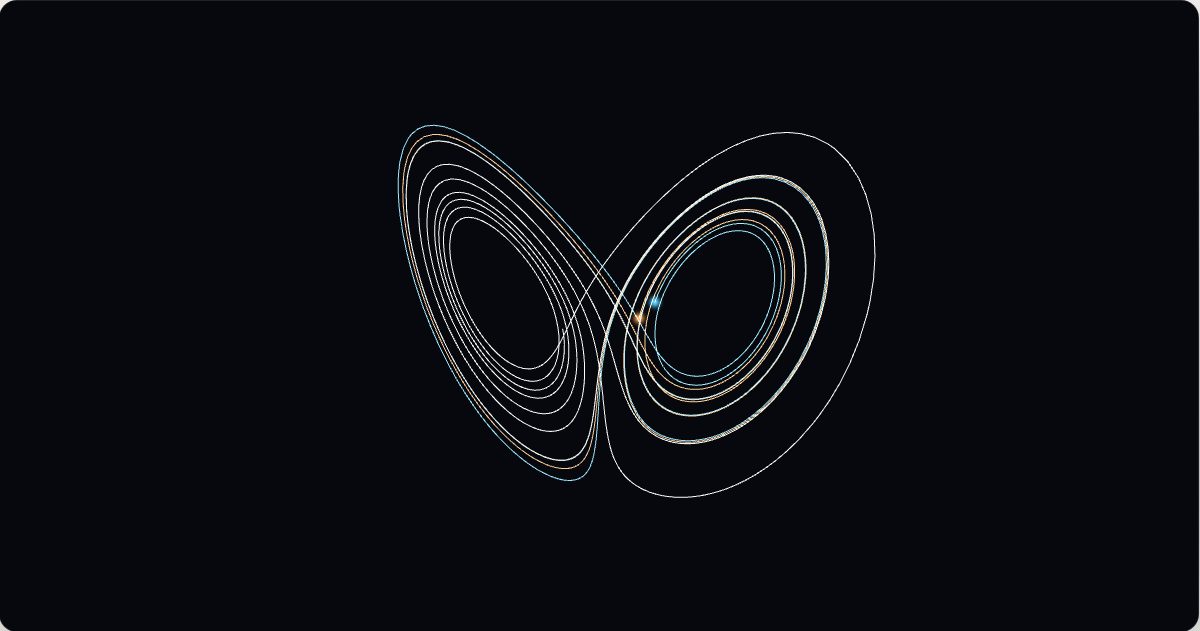
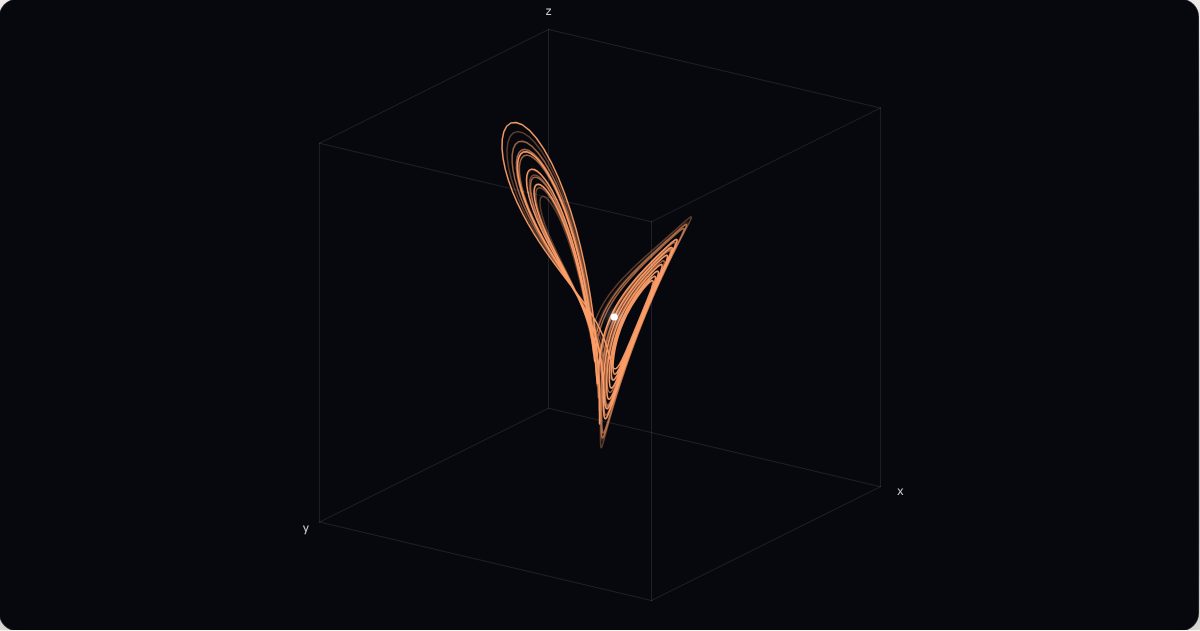
The Lorenz attractor and other strange attractors in 3D
Lorenz, Rössler, Aizawa, Thomas and Halvorsen in 3D, with the butterfly effect measured live.

The double pendulum
A swarm of nearly identical pendulums that starts out moving as one and ends up fanned out.
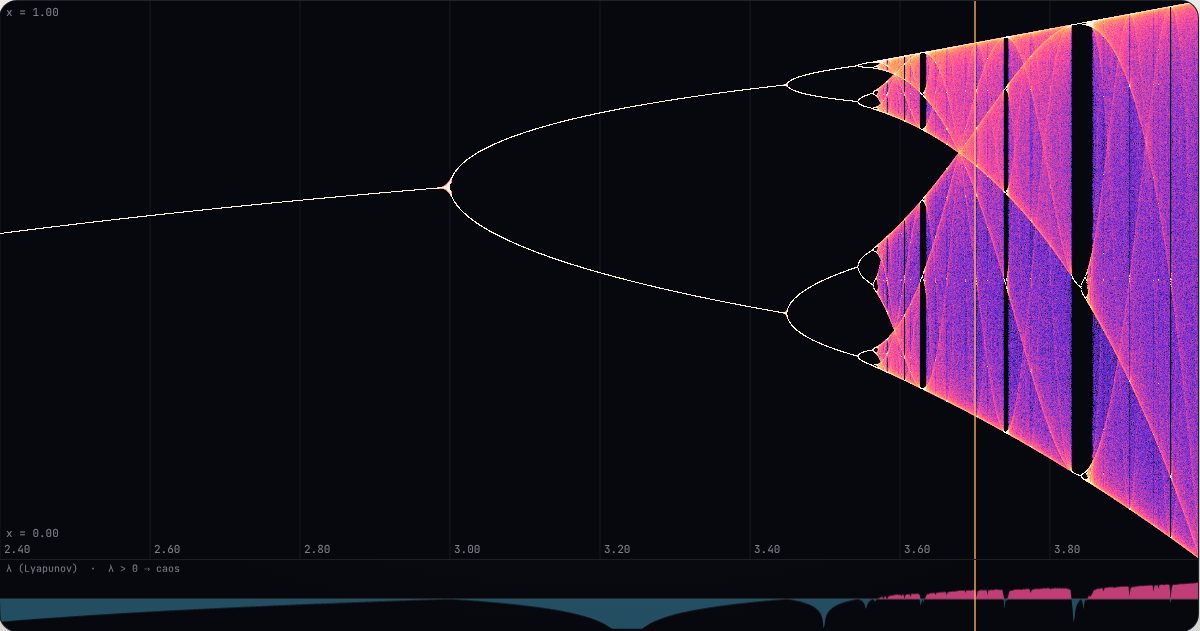
The logistic map: the route to chaos
A zoomable bifurcation diagram, the Lyapunov exponent and the cobweb plot of a one-line equation.
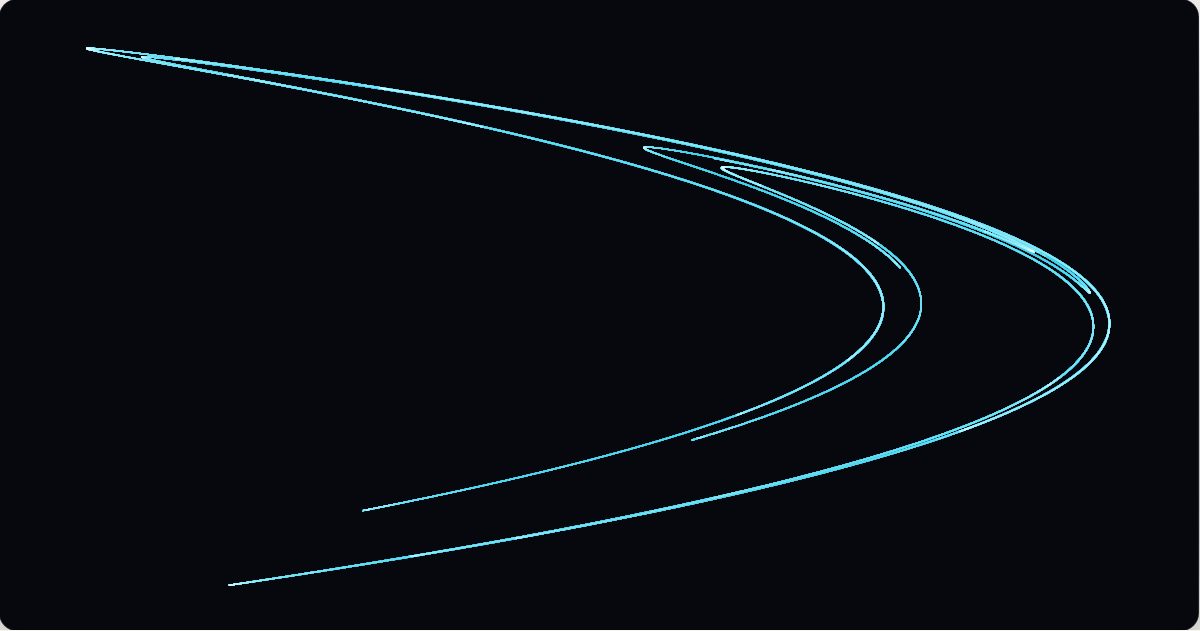
The Hénon map: a fractal in two lines
A horseshoe that, when you zoom in, turns out to be made of lines within lines, without end.
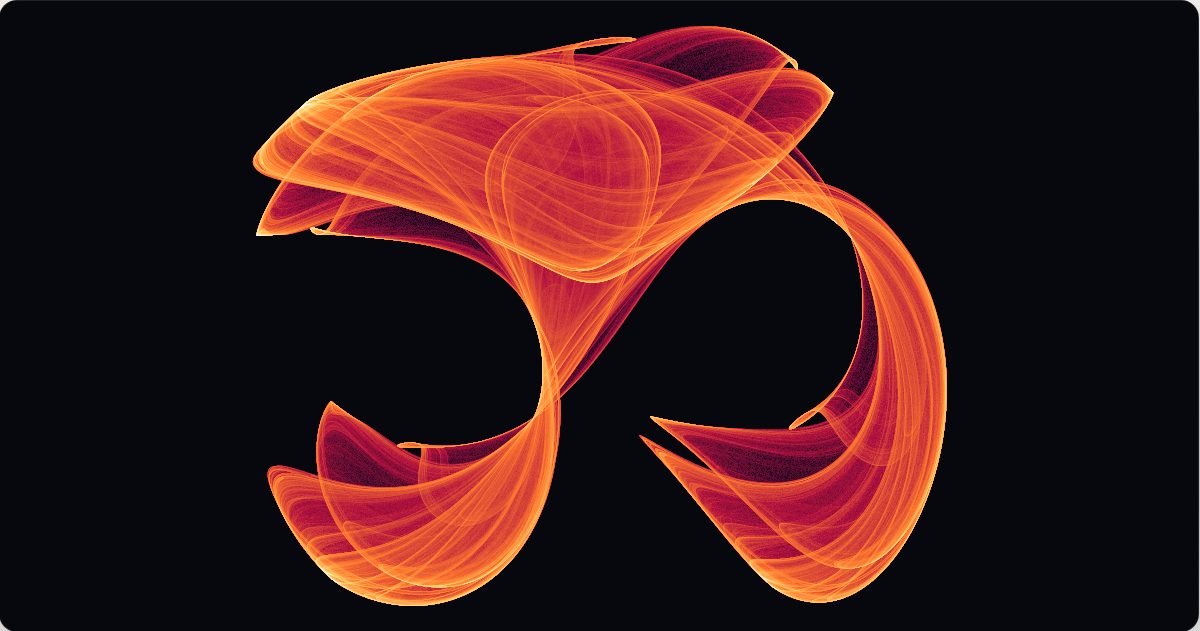
Strange attractors in the plane
Two lines of trigonometry iterated millions of times: generative art you can download.
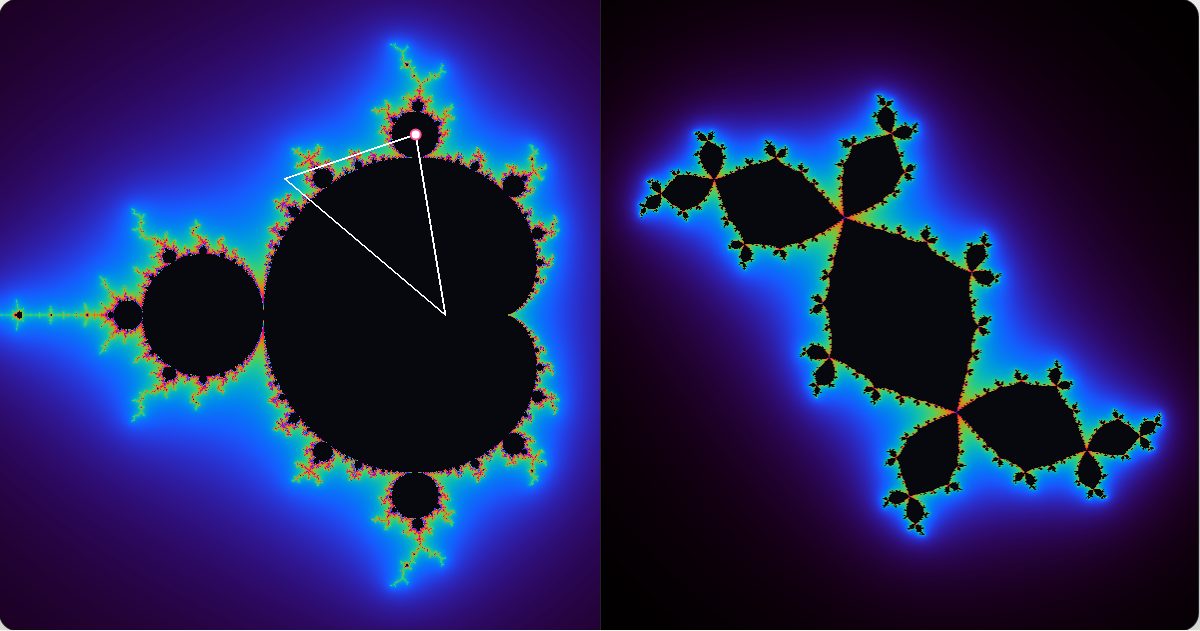
Mandelbrot and Julia: the edge of chaos
The two sets linked together: point at a spot in the Mandelbrot set and its Julia set appears.
Lab: build your own simulation
Write your own equations, tune the parameters and share the result with a link.